
Self-Drilling vs. Self-Tapping Screws: Differences and Uses
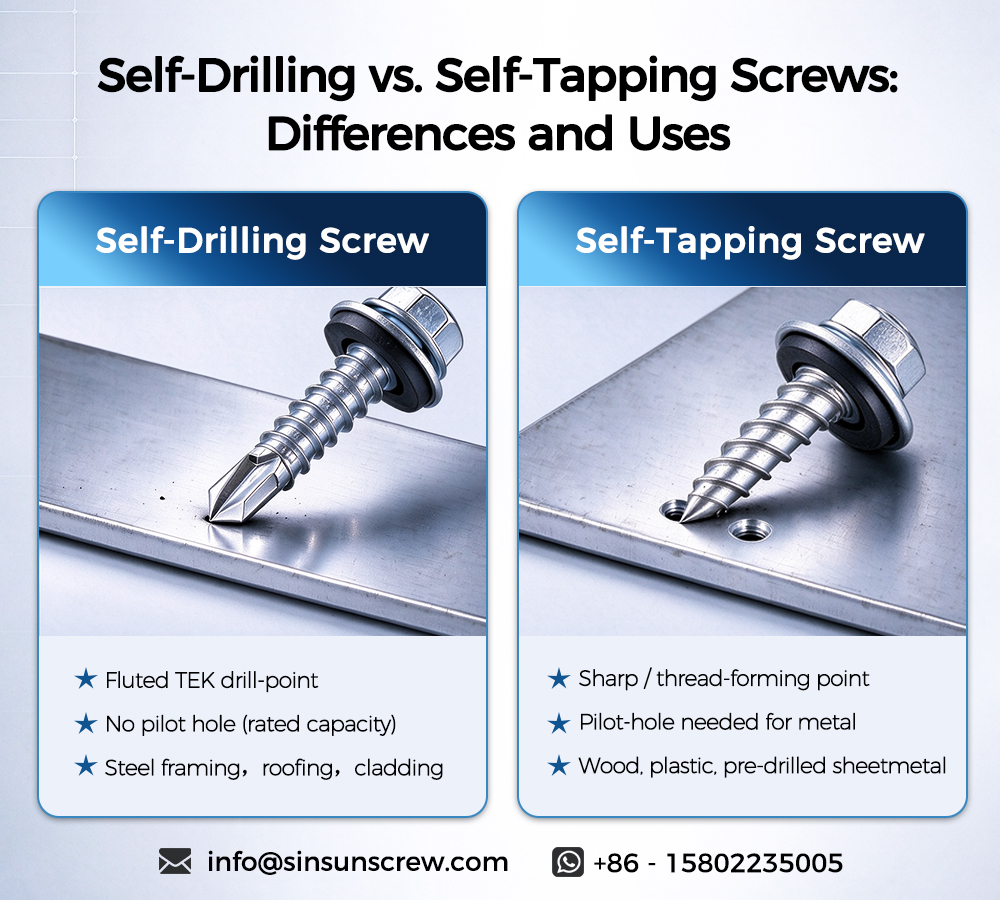
When buyers compare self-drilling vs. self-tapping screws, the main question is whether a pilot hole is needed. self-drilling screw has a drill-shaped point that makes its own hole and then forms the mating thread. A self-tapping screw forms or cuts its own thread, but it does not always have a drill point. In metal, many self-tapping screws are used with a prepared pilot hole.
The terms are often used interchangeably, but choosing the wrong point can damage a panel or leave an unreliable connection. This guide explains the practical difference for steel framing, sheet metal, roofing, wood, and general assembly work.
Quick answer: self-drilling screws are a type of self-tapping screw
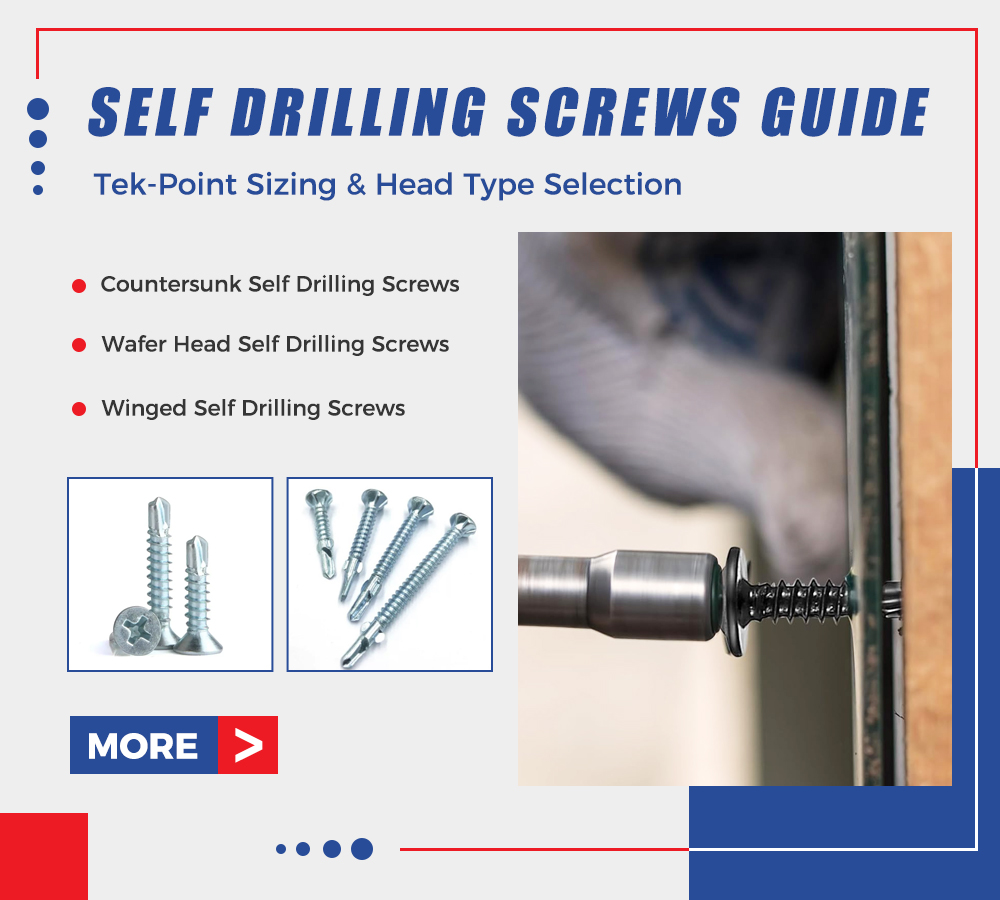
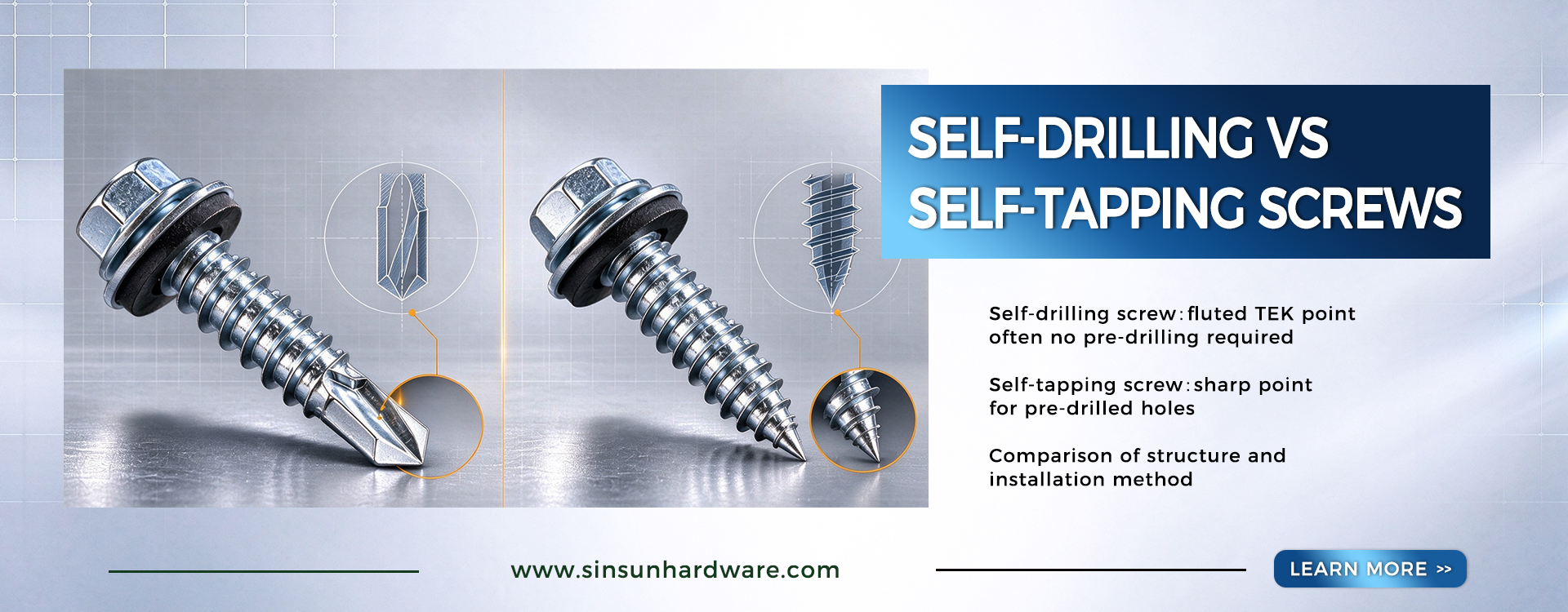
A self-drilling screw is normally considered a type of self-tapping screw because it creates the hole and then makes its mating thread as it is driven. The important distinction is the drill point. This drill-bit-shaped tip is commonly called a TEK point. It removes material before the threads engage.
A standard self-tapping screw may have a sharp, thread-forming, or thread-cutting point instead. It can form its own thread in wood, plastic, or a correctly sized pilot hole in sheet metal. Not every self-tapping screw is designed to drill through steel without preparation.
|
Feature |
Self-drilling screw |
Self-tapping screw |
|
Point design |
Fluted drill point / TEK point |
Sharp, thread-forming, or thread-cutting point |
|
Hole preparation |
Usually no pilot hole within the rated drilling capacity |
Often uses a pilot hole in metal |
|
Installation process |
Drills and fastens in one operation |
Forms or cuts a thread after the screw enters the material |
|
Typical uses |
Steel framing, sheet metal, metal roofing, cladding |
Pre-drilled sheet metal, plastic, wood, electrical enclosures, repair work |
|
Key buying check |
Total material thickness and point rating |
Pilot-hole size, substrate, and thread form |
How does a self-drilling screw work?
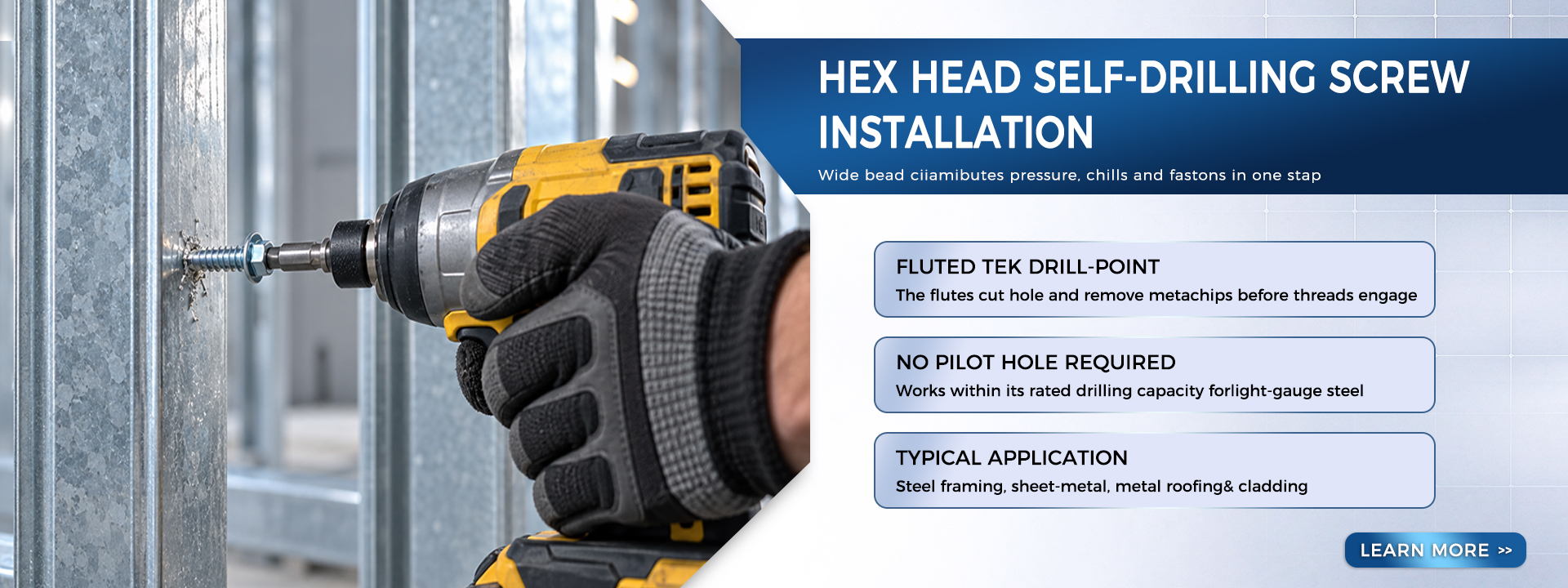
The flutes at the drill point cut a hole and carry chips away. Once the point has passed through the material, the thread forms the connection. Select the point for the combined thickness of the materials being joined, including any gap between steel layers. If the threads engage too early, the sheets can separate rather than draw together.
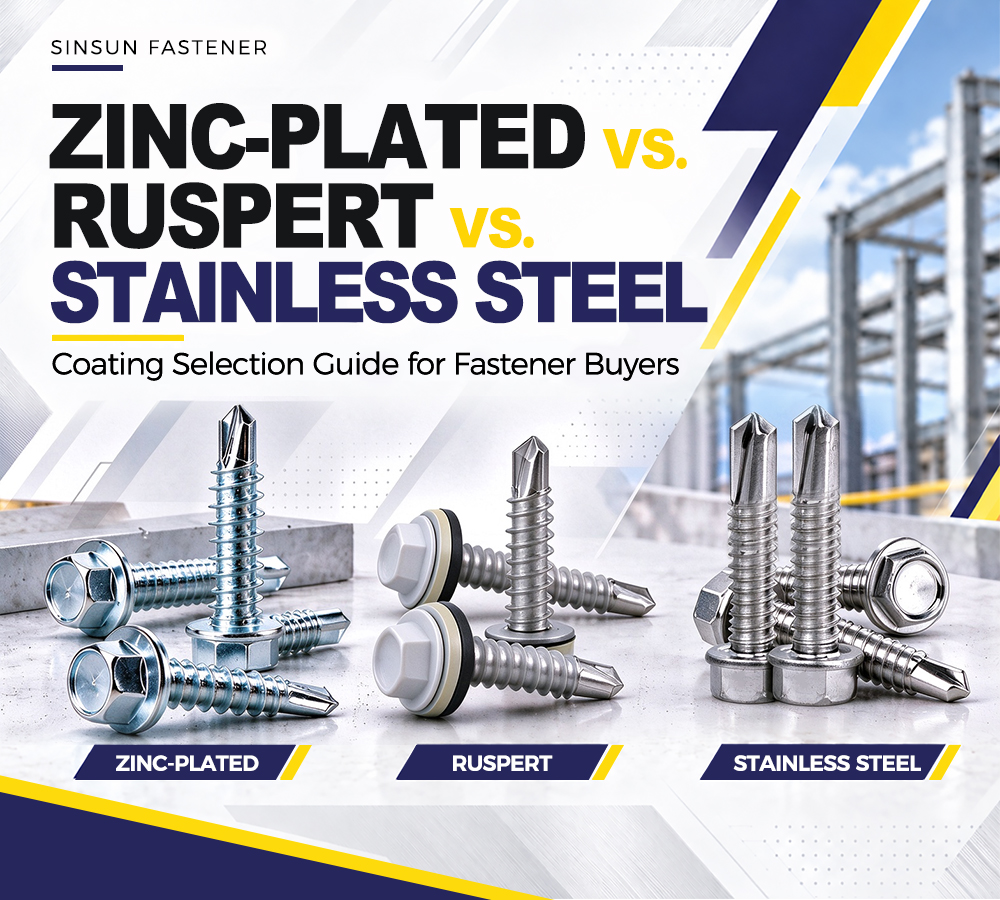
Self-drilling screws suit light-gauge steel framing, ducting, steel-to-steel connections, metal cladding, and metal roofing. For exposed panels, specify the washer, finish, and corrosion resistance for the actual environment.
When is a self-tapping screw the better choice?
Choose a self-tapping screw when the assembly already has a punched or drilled hole, when the substrate is wood or plastic, or when a specific thread-forming design is required. In sheet metal, a correctly sized pilot hole gives a controlled start and helps maintain thread engagement.
This is common in electrical enclosures, equipment guards, cabinet work, brackets, and repairs. It is also appropriate when the metal is beyond the selected self-drilling point's capacity. A pilot hole is often the correct engineering decision.
How to choose the right screw for the job
1. Check the base material and total thickness
Start with the materials being joined: carbon steel, stainless steel, aluminium, timber, plastic, or a mixed assembly. For metal-to-metal fastening, use total steel thickness—not only the top sheet—to select the drill point. Do not assume that a larger diameter means a higher drilling capacity.
Published product data shows why this matters. One current #3
self-drilling metal screw is rated for fastenings up to 0.22 in. (5.6 mm), while a separate #4/#5 range is rated for metal-to-metal fastenings up to 0.5 in. (12.7 mm). These are manufacturer-specific examples, not universal TEK-point limits. Always use the technical sheet for the exact screw, material, and installation tool.
2. Match the head style to the application
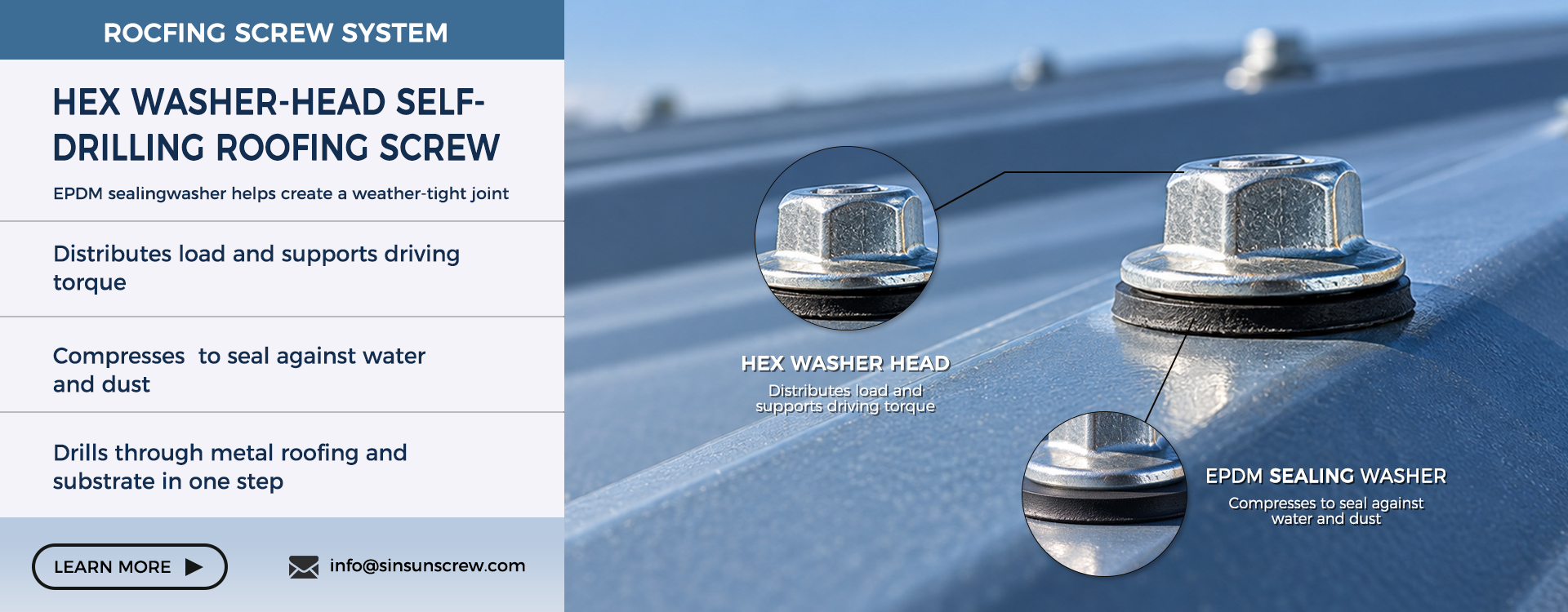
Hex washer-head self-drilling screws are widely used for metal roofing and cladding and can be supplied with sealing washers. Wafer-head screws provide a broad, low-profile bearing surface for light steel framing. Pan heads suit general assemblies; countersunk heads are for a flush finish. Head shape affects bearing area and tool access.
3. Specify corrosion protection for the environment
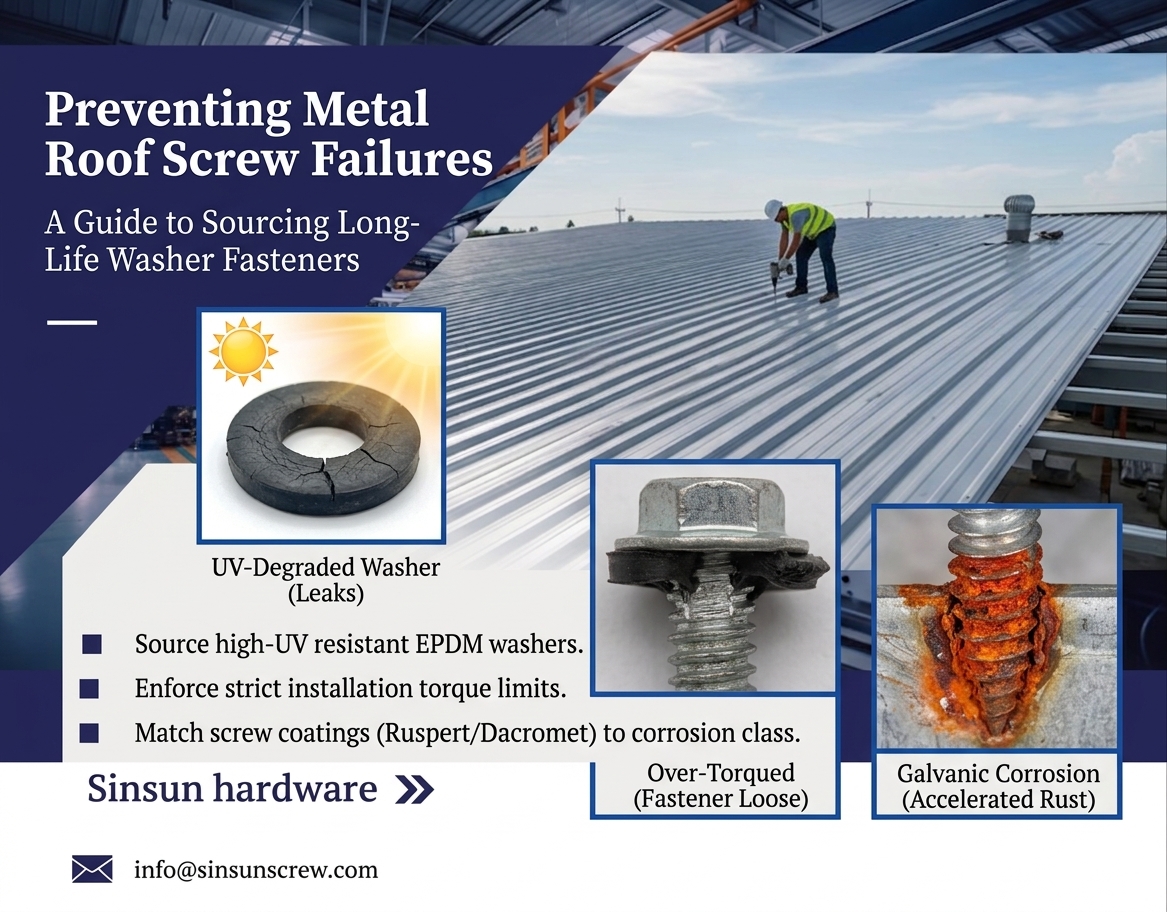
For dry indoor conditions, a suitable plated carbon-steel fastener may be appropriate. Exterior, humid, coastal, chemical, or dissimilar-metal environments need a project-specific corrosion review. Consider the material grade, coating, washer, panel finish, and galvanic-corrosion risk together.
4. Choose the right drive and installation method
Use a controlled screw gun or driver. Hold the screw perpendicular to the work surface, keep the bit fully engaged, and stop when the head or sealing washer is correctly seated. For self-tapping screws in metal, drill or punch the pilot hole to the specified size.
Common buying and installation mistakes
● Selecting a point without checking full steel thickness.
● Treating every sharp-point screw as a no-pilot-hole metal screw.
● Choosing roofing screws without confirming washer and corrosion requirements.
● Using a countersunk head where a larger bearing surface is needed.
● Driving at an angle or over-compressing the washer.
● Comparing quotations only by size and coating, without confirming point, head, material, drive, and packaging.
Frequently asked questions
Are self-drilling screws and TEK screws the same?.
In many markets, “TEK screw” means a self-drilling screw with a drill-point tip. Confirm the point number and stated drilling capacity, because point geometry varies by range.
Do self-tapping screws need pilot holes?.
For metal, many do. Some designs can start in thin material, wood, or plastic, but that does not make them equivalent to a self-drilling screw for every steel application.
Can self-drilling screws be used for metal roofing?.
Yes, when the point capacity matches the panel and support and the screw is specified for exterior exposure. Check the head style, washer, panel profile, coating, and seating.
Source the right fastening solution with Sinsun
Sinsun supplies self-drilling screws, self-tapping screws, and roofing screws for wholesale and project requirements. When requesting a quotation, provide the base material, combined thickness, connection type, head style, coating requirement, and intended environment. That information allows the fastener to be matched to the application.