
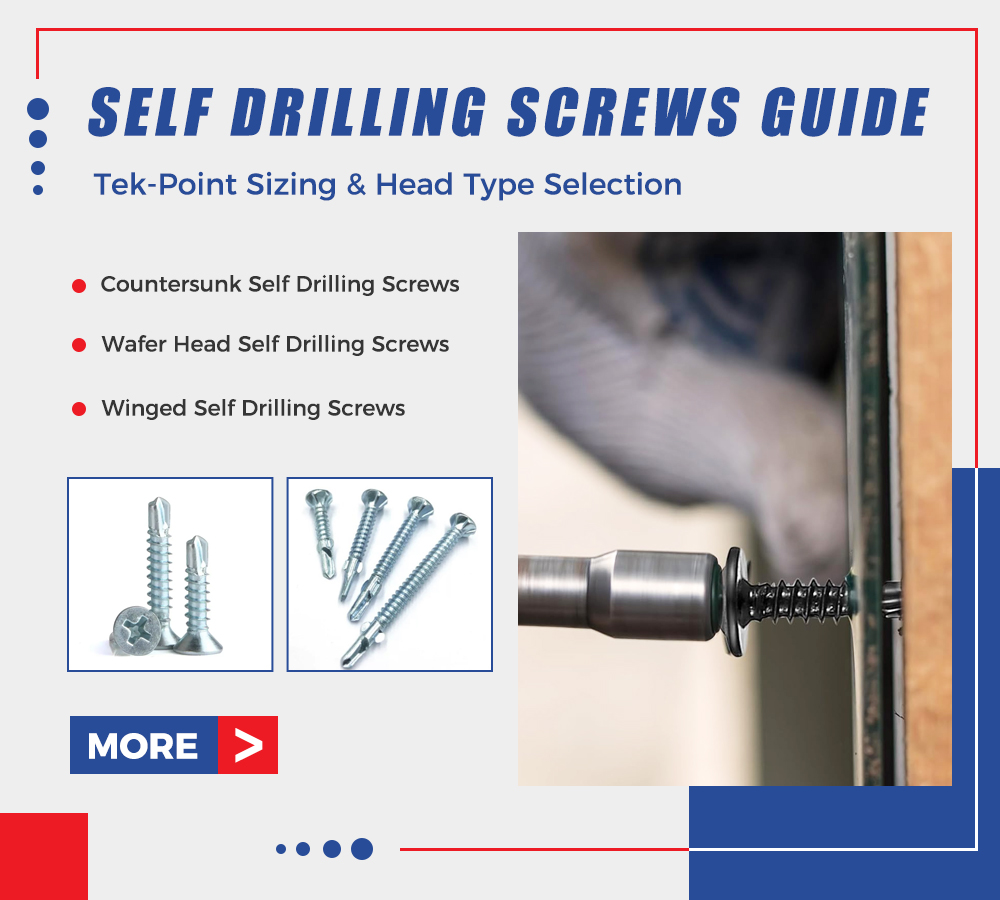
Self-Drilling Screws Guide: Tek-Point Sizing & Head Type Selection
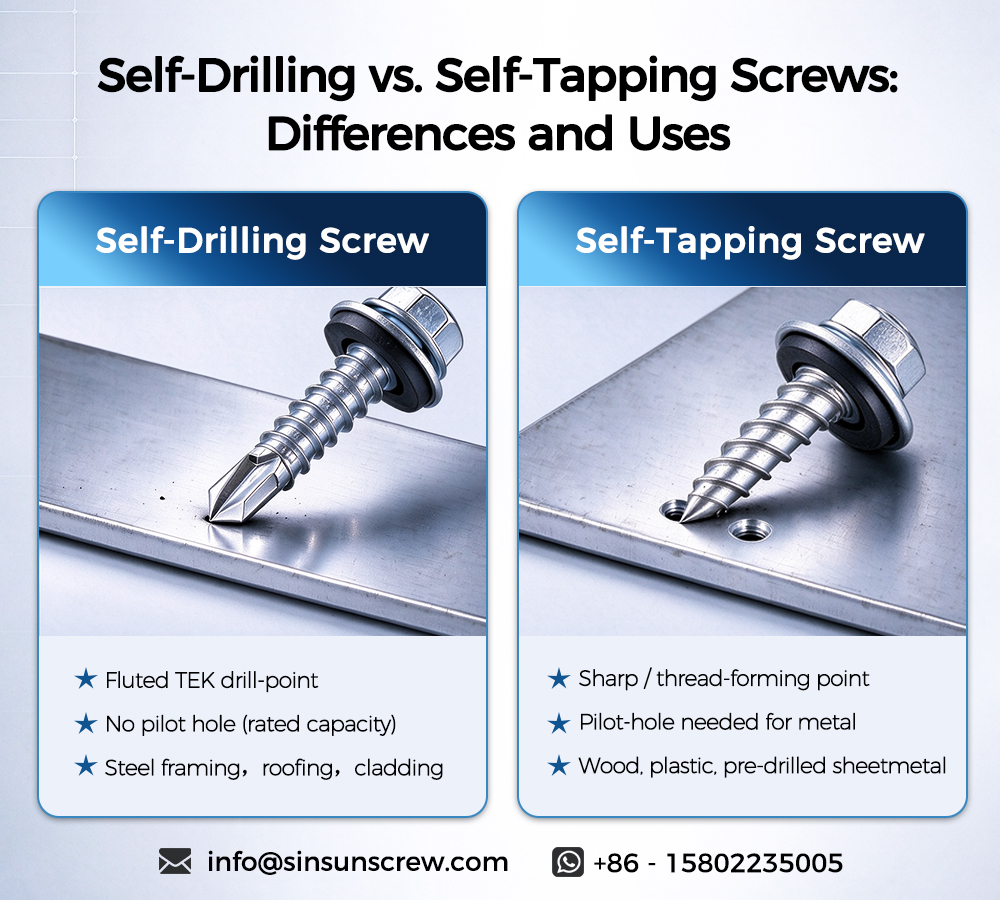
If you have ever worked with light steel framing or sheet metal you know how much easier self-drilling screws make the job. No pre-drilled pilot holes, no further steps. It only takes a few seconds to run it in and line it up. As a result, panel distortion and surface cracks can be avoided, saving a lot of time.
The self-drilling screws, however, are not a panacea. Some problems with the site can easily be resolved, such as selecting the wrong screw, drilling improperly, stripping threads, or loose connections. If experienced workers grab what is on the truck without checking the Tek-point size or head style, things can go wrong.
This guide is for the most common self drilling screws not for roofing. Next time, you will be able to make better decisions because we will discuss Tek-point sizing, head type selection and what works where.
How Tek-Point Design Works & Why Sizing Matters ?
The Tek-point is the core functional structure of self-drilling screws, and its model number directly matches the penetrable metal thickness. This is the most fundamental selection standard, yet it is frequently ignored by inexperienced workers. Each Tek specification is designed for a fixed metal gauge range; any mismatch will directly affect drilling effect and fastening tightness.
In actual construction, Tek 1 tips are suitable for ultra-thin metal sheets above 20 gauge, mostly used for HVAC ducts and thin decorative metal panels.
Tek 2 is the most versatile type, compatible with 20 to 14 gauge steel, covering most conventional sheet metal and light steel framing scenarios.
Tek 3 corresponds to thicker 14 to 10 gauge heavy steel, ideal for load-bearing metal assemblies that require full thread engagement. Using undersized Tek points on thick metal will cause unpenetrated holes and loose threads, while oversized tips on thin plates will easily punch through and damage panels.
Common Self-Drilling Screw Head Styles
Tek-point size guarantees smooth drilling, while the screw head type determines clamping stability and installation finish. There are three head styles most commonly used for daily metal assembly and light steel construction, with clear functional differences for different job requirements.
Wafer Head Self Drilling Screws
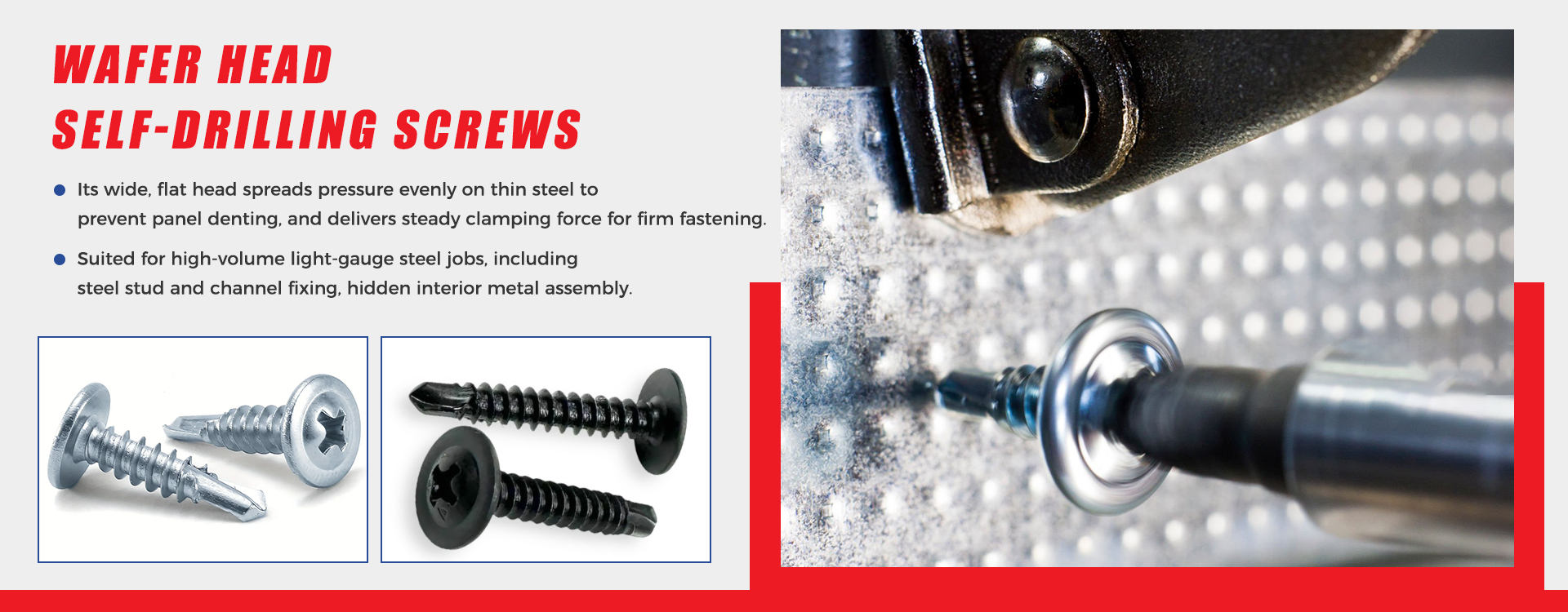
Wafer head self drilling screws are the standard for light gage steel framing and interior metal partition installation.” The large-diameter, low-profile head distributes the pressure uniformly on thin steel surfaces. Small-head screws with their concentrated pressure are a frequent cause of panel dimpling and deformation, and the design prevents this from happening.
They grip tightly to metal panels with consistent clamping force, ideal for repetitive high-production framing applications. Contractors most commonly use wafer-head self-drilling screws to install steel studs, fix metal channels and to carry out hidden interior metal assembly projects.
Countersunk Self Drilling Screws
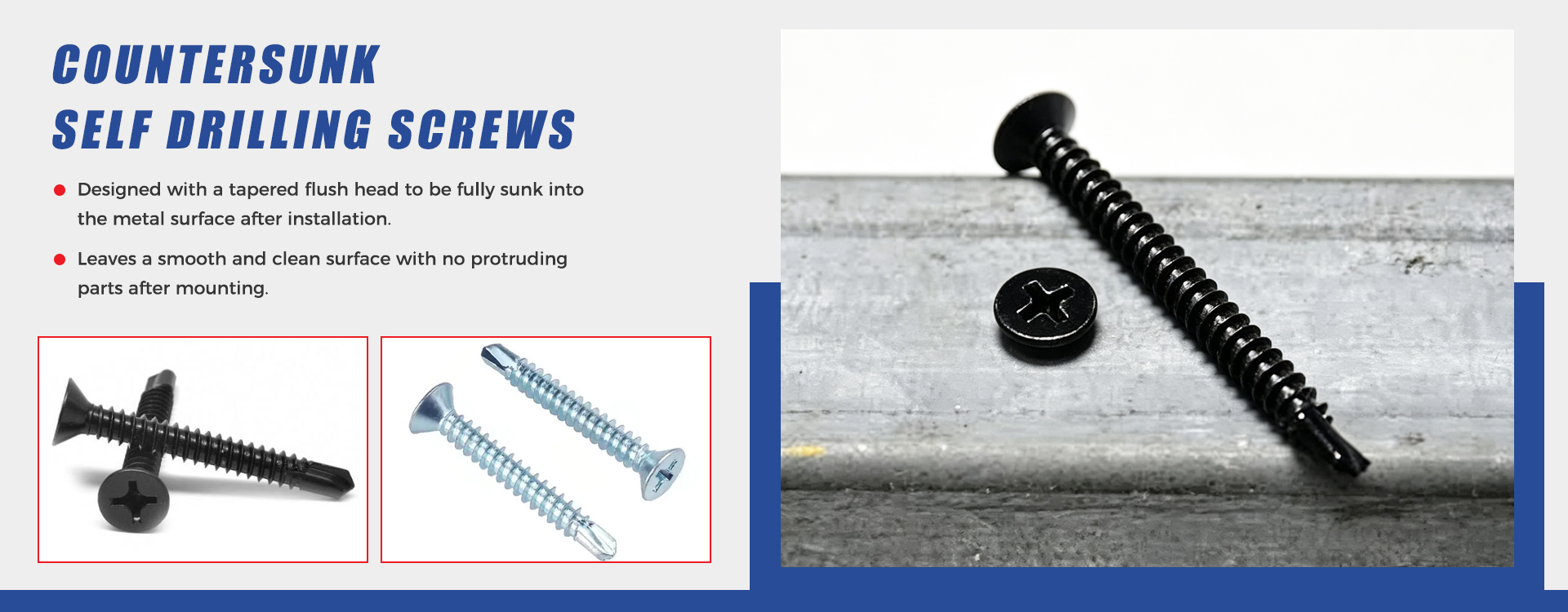
Countersunk Self-Drilling Screws These screws are designed with a tapered flush head that allows it to be fully sunk into the metal surface after installation. This type has no parts that stick out, like wafer-head screws that remain exposed on panels, leaving a smooth and clean surface for visible metal structures.
They are the preferred option for situations where esthetic standards are high, such as in the assembly of metal cabinets, outdoor decorative cladding and the installation of exposed sheet metal. Its only drawback is its limited pressure bearing area, so it is not suitable for structural frames with heavy loads requiring support over a large area.
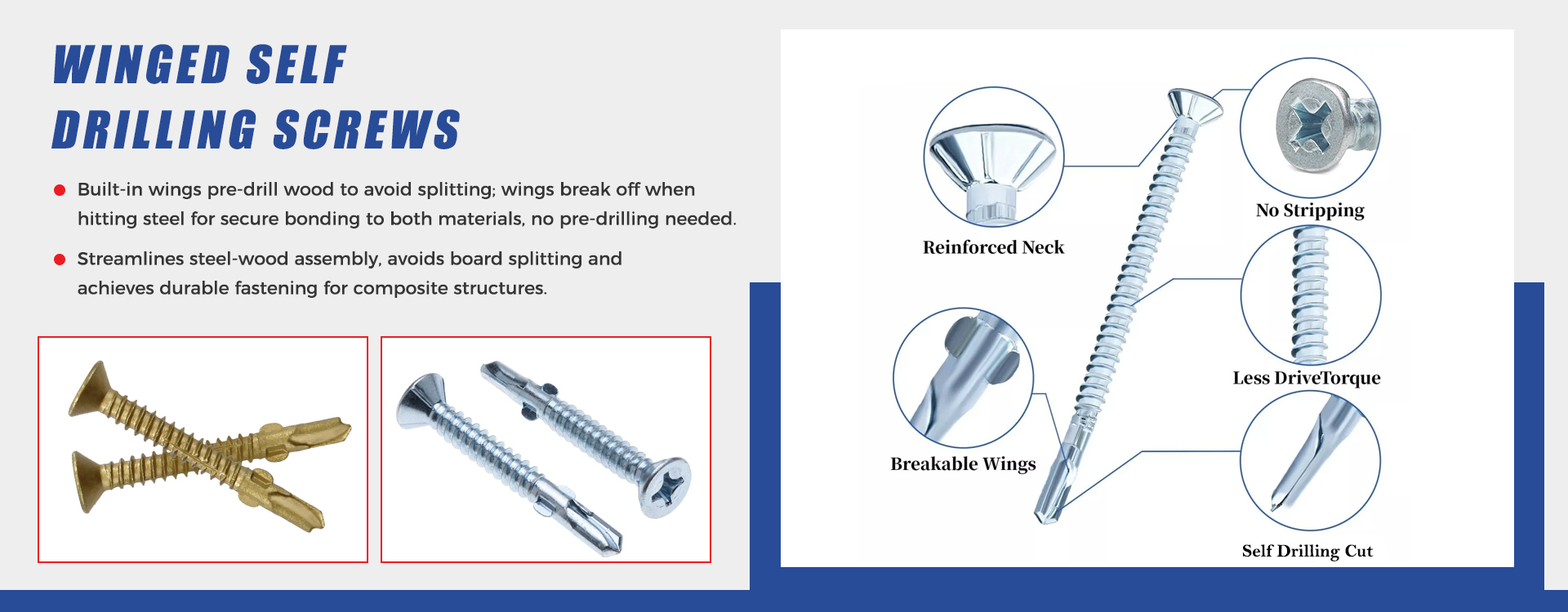
Winged Self Drilling Screws
Winged self drilling screws are specialist fasteners designed for use in timber to steel composite connections. Two reserved wings above the drill tip create smooth pre-drilled holes for wood during installation to prevent splitting. As soon as the tip of the drill touches and pierces the steel layer, the wings will shear off automatically, allowing the entire thread section to lock tightly into both wood and metal materials.
The integrated drilling and fixing mode simplifies complicated pre-drilling of mixed-material structures. It solves the problem of wood board cracking in steel-wood connection projects and guaranties the durable bonding of composite assemblies.
Practical Self-Drilling Screw Selection Rules
Selecting the right self drilling screw does not require advanced technical expertise. On-site installers and bulk buyers can follow these simple, practical rules to avoid most common matching errors and ensure reliable fastening results:
- Select the appropriate Tek-point size based on the gauge of your metal substrate. Tips used haphazardly can lead to partial drilling, damage to panel, or threaded connections that are not tight.
- When structural light-gauge steel framing requires stable clamping force, use wafer-head screws. When a flush, clean finish is required on visible, exposed metal surfaces, use countersunk screws.
- Keep the use of winged self-drilling screws for wood-to-steel hybrid connection assemblies only. Their unique wing design prevents wood splitting and enables tight, integrated fastening between wood and metal materials.
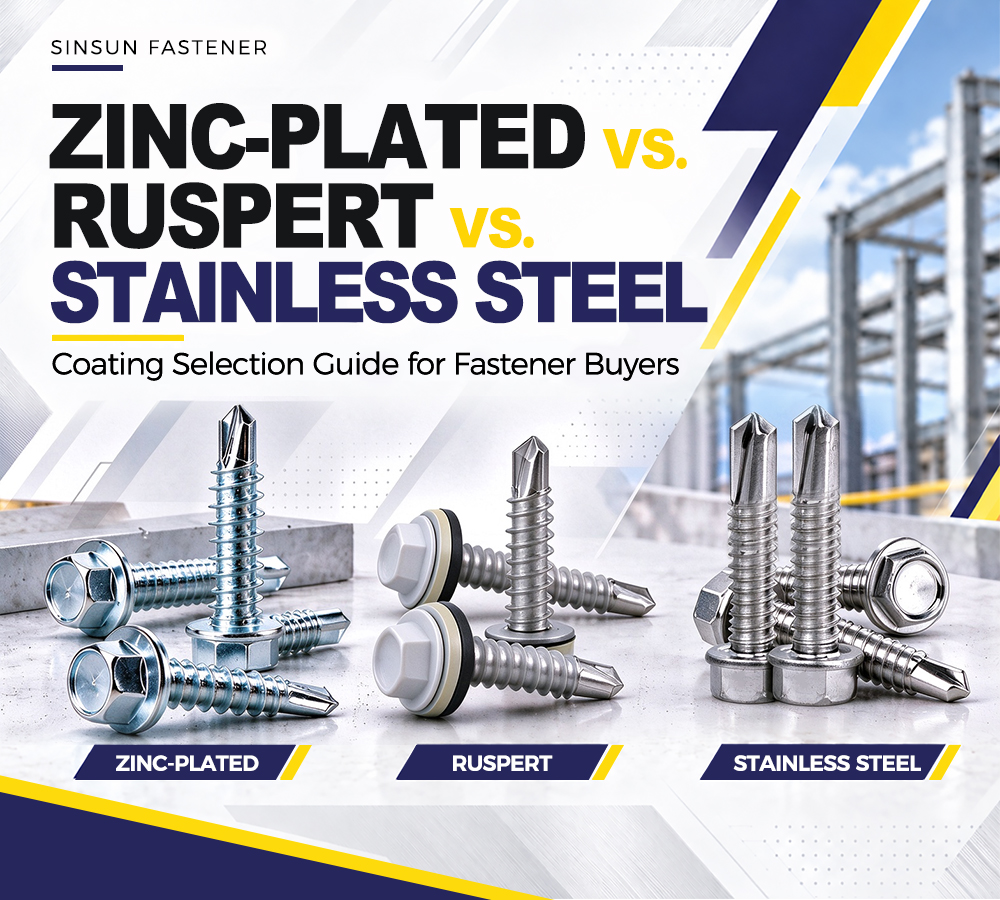
- Standard coated self-drilling screws work well for dry indoor assembly projects. Use the corrosion-resistant fasteners for outdoor, humid or high corrosion environments to maximize life.
Typical On-Site Installation Mistakes to Avoid
It is common for fasteners to fail on site after repeated errors. By avoiding these errors, you can avoid the majority of rework.
Mistake 1: Using the wrong Tek-point for the metal thickness. This is the most common problem. Too small, and the screw never fully penetrates. When it's too large, thin panels are torn apart. Check your steel gauge first.
Mistake 2: Using countersunk screws for structural framing. The smaller bearing surface means less clamping force over the connection area. There is no load-bearing purpose for countersunk screws.
Mistake 3: Using wafer-head screws for visible surfaces. Although they are structurally sound, they look unfinished on exposed panels because of their protruding heads.
Mistake 4: Using standard self-drilling screws for timber-to-steel connections. Without the wing design, standard screws often split the wood. Mix-material assemblies should be assembled with winged screws.
Screw Type & Specification Quick Reference Table
To help users quickly compare and finalize screw models without reading through full paragraphs, the table below condenses core specs and exclusive strengths of each self-drilling screw type. It focuses on differentiated features for faster on-site judgment and bulk purchasing decisions.
| Screw Type | Applicable Metal Thickness | Best Fit Scenarios | Differentiated Strength |
| Wafer-Head Self-Drilling Screws | 20–10 Gauge (Tek 2 / Tek 3) | Structural light-gauge steel framing, metal stud and channel fixing | Wide bearing head avoids panel dimpling, stable clamping for long-term structural support |
| Countersunk Self-Drilling Screws | 20–14 Gauge (Tek 1 / Tek 2) | Exposed metal panels, cabinetry, decorative cladding | Fully flush finish, zero protrusion for clean, aesthetic installation |
| Winged Self-Drilling Screws | 20–12 Gauge (Tek 2 / Tek 3) | Timber-to-steel hybrid assembly, composite structure fastening | Unique wing design prevents wood splitting, one-step drilling and fastening |
Key Takeaways for Accurate Self-Drilling Screw Selection and Installation
Self-drilling screws drastically simplify on-site metal and composite assembly, but their final performance always depends on precise selection and standard installation. To sum up the core takeaways for practical use:
- Tek‑point sizing is the foundation of reliable fastening. Matching the correct Tek model to metal thickness avoids incomplete drilling, panel damage, and loose connections — the root cause of most fastener failures.
- Head type defines application accuracy. Wafer-head styles prioritize structural stability for framing, countersunk styles focus on flush aesthetic finishes, and winged designs solve exclusive wood-to-steel connection problems.
- Standardized selection reduces long-term costs. Reasonable screw matching and correct operation effectively lower on-site rework rates, improve assembly efficiency, and extend the overall service life of metal structures.
For light steel framing, decorative metal installation and timber-steel composite projects, targeted self-drilling screw selection is always the most practical and cost-effective construction solution.
If you still have questions on Tek-point sizes, head styles, or need specialized solutions in self drilling screws for particular construction projects, our expert team of fastener specialists is ready to assist. We provide project consulting, customized specifications and whole sales service, to satisfy different site fastening demands. Contact us now for professional advice and competitive prices.