
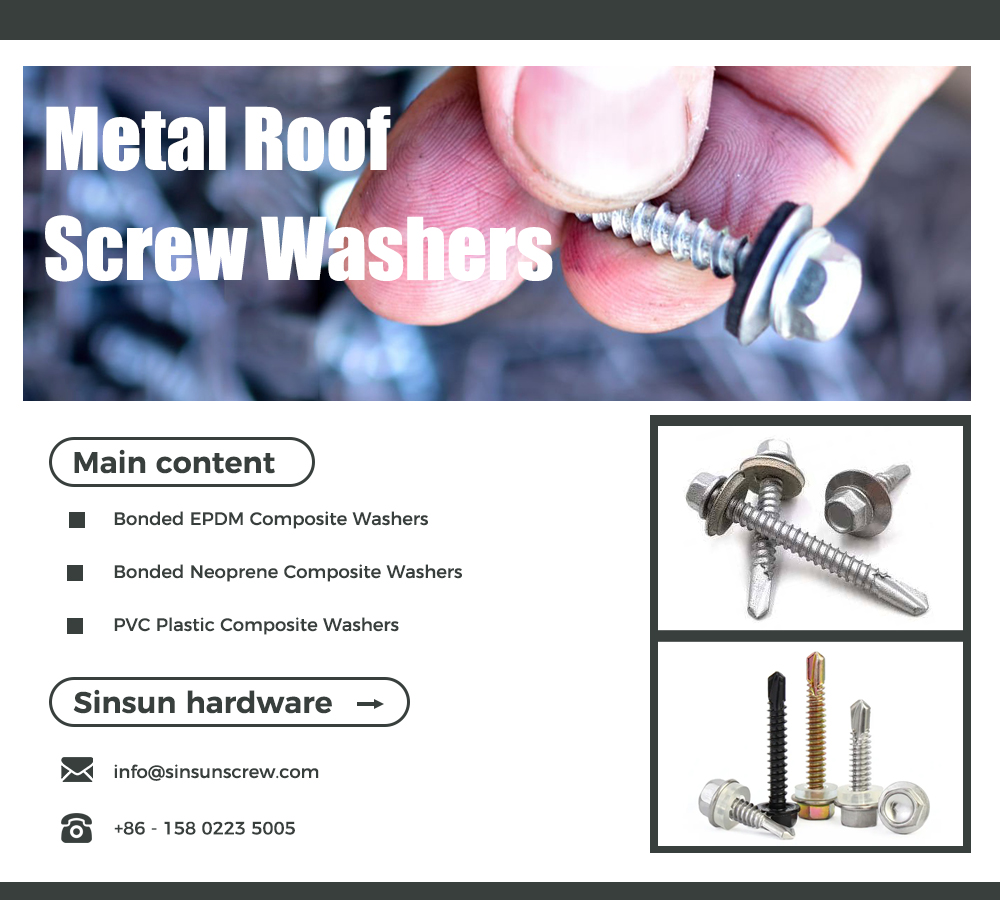
Metal Roof Screw Washers – Which Ones Seal, Which Ones Fail
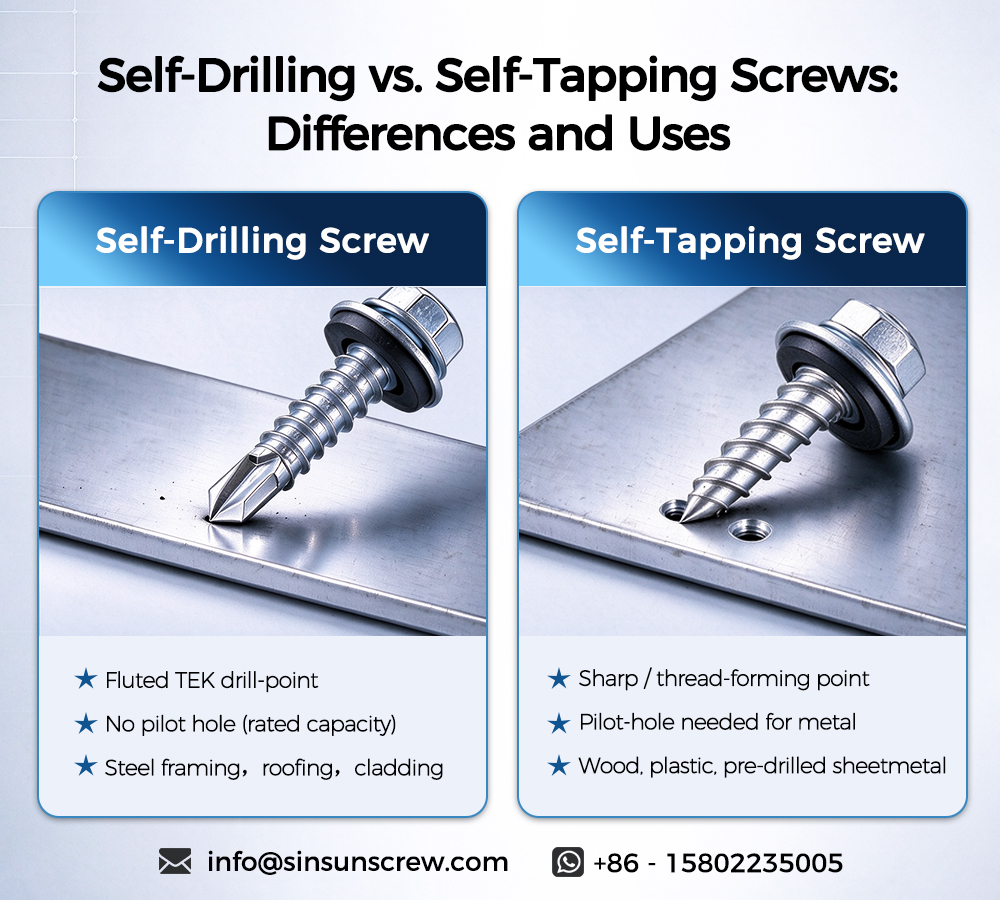
Wondering which washer are used with roofing self drilling screws on metal roof jobs? You can compare bonded EPDM, neoprene, and PVC washer, as well as essential installation rules to avoid roof penetration leaks.
A roofing screw only serves to hold metal panels tightly in place. The washer fitted under the screw head is entirely responsible for the sealing. Gaskets intended for outdoor roof exposure are not all made for outdoors, and generic hardware washer are not reliable for waterproofing. Select the wrong washer type for your roofing screws and even the best fasteners will fail prematurely.
This guide is limited to gasket options specifically designed to work with roofing screws for metal roofing systems. The following article discusses practical options, clarifies limits of use, and describes washer types that should never be used in permanent roof construction.
Why Roofing Screws Require Purpose-Made Sealing Washers?
A metal roof sheet expands and contracts constantly as the outdoor temperature changes. Every drilled hole created by a roofing screw creates a potential entry point for rainwater, dew and moisture. Simple metal flat washers can spread clamping pressure, but they form zero waterproof barrier against water.
Modern roofing fastener assemblies adopt a combined solution: roofing screw + integrated composite sealing washer. An elastic rubber layer fills tiny gaps between the screw head and metal panel, while the metal backing plate supports even compression. If you don't use sealing gaskets that are the right size, moisture can seep through the gaps around fastener shafts. Over time, this can lead to rust, stains on the panels, and water damage inside the car.
It is not true that all rubber gaskets will perform equally under continuous UV sunlight, heavy rainfall, and seasonal temperature swings. It is for this reason that roofing contractors order preassembled roofing screws with three main washer options.
Three Main Washer Types Designed for Roofing Screws
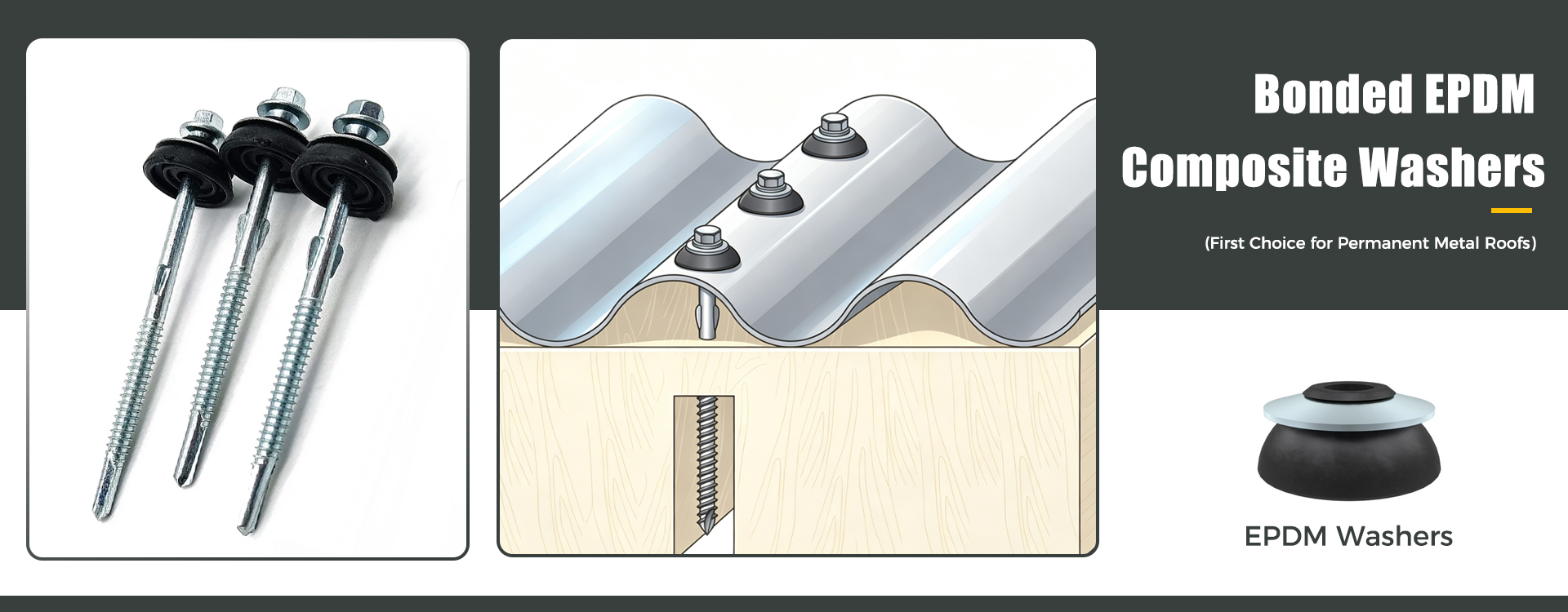
Bonded EPDM Composite Washers (First Choice for Permanent Metal Roofs)
Bonded EPDM washers consist of a galvanised or stainless steel carrier plate permanently bonded to an EPDM rubber layer via vulcanisation. The two layers cannot separate under normal installation torque, making this the industry standard for long-lasting metal roofing projects.
As a result of its excellent resistance to ultraviolet radiation, EPDM rubber is ideal for outdoor use. In addition, it is resistant to the effects of ozone aging. It is also resistant to extreme temperature changes. It remains flexible. It does so through hot summers and freezing winters. It does not crack or harden.
Will fit all standard hex head self drilling roof screws including the longer versions used for thicker purlins and multi layer metal panels.
Bonded Neoprene Composite Washers (General Budget Alternative)
Like the EPDM bonded, neoprene washer have a similar two layer bonded construction. You will find them used extensively as standard on entry level ranges of roofing screws. They provide a cheap short term watertight seal at low unit cost.
Its biggest weakness is its resistance to the elements. Neoprene rubber deteriorates faster when exposed to protracted direct sunlight. Following a period of sustained exposure to UV, the material becomes fragile and loses its ability to stretch, leading to the formation of minute fractures that permit water ingress.
Neoprene gaskets should not be used in coastal locations or on permanently exposed roof surfaces.
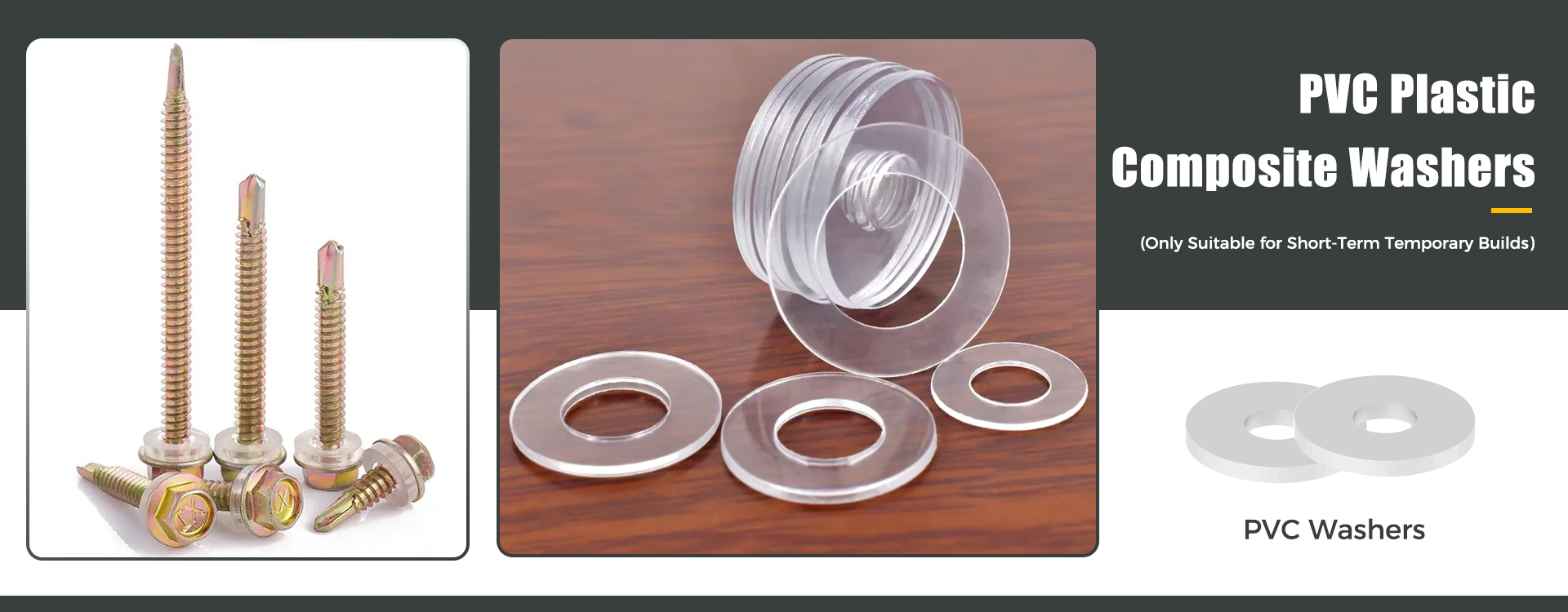
PVC Plastic Composite Washers (Only Suitable for Short-Term Temporary Builds)
PVC plastic sealing washers are the cheapest in the market. More often they are found on cheap colour-coated roofing screws for simple temporary construction.
One important limitation should be stressed right up front. PVC plastic is not suitable for long-term outdoor weathering. Rapid hardening, shrinkage and fragmentation are caused by continuous heat and UV radiation. Damaged plastic gaskets cannot provide a consistent sealing pressure around screw penetrations.
Avoid PVC washers entirely when working on any permanent metal roof system.
Washer Types You Should Avoid Pairing With Roofing Screws
In order to save money, many buyers use loose rubber gaskets or mechanical washer with roofing screws. There is a high failure risk associated with these combinations, so most professional roof specifications don't accept them.
- Torque will cause uneven deformation of pure rubber gaskets. Loose rubber washer alone (without a carrier plate): These easily tear when installed and cannot evenly distribute pressure.
- Standard flat washer, plain metal: No waterproof rubber layer. They just spread load and are of no protection against water penetration.
- Spring lock washer, serrated anti-vibration washer: Used for anti-loosening of mechanical equipment. They have flat contact surfaces and are not able to form continuous waterproof seals on roof panels.
- For planning orders, instead of buying loose washer to assemble on site, use fully pre-assembled roofing screws with factory-bonded sealing washer. Manual assembly seals are almost always inconsistent. More information on the risks of incorrect gasket selection can be found in our article:[Why Washers Fail: Wrong Washer Choices Lead to Loose Outdoor Fasteners]
Practical Guide: Match Washers to Your Roof Project Environment
If you know where your project is and how long it will last, it’s easy to choose the right washer:
1. Coastal / high humidity exposed metal roof Roofing screws + bonded EPDM composite washer.
2. Permanent Inland Metal workshop or barn: Bonded EPDM composite washer + roofing screws.
3. Temporary warehouse in the interior in the medium term: Roofing screws + Neoprene bonded composite washer.
4. Roofing screws + PVC plastic composite washer (temporary shelter for short term construction).
Common Installation Mistakes That Ruin Sealing Performance
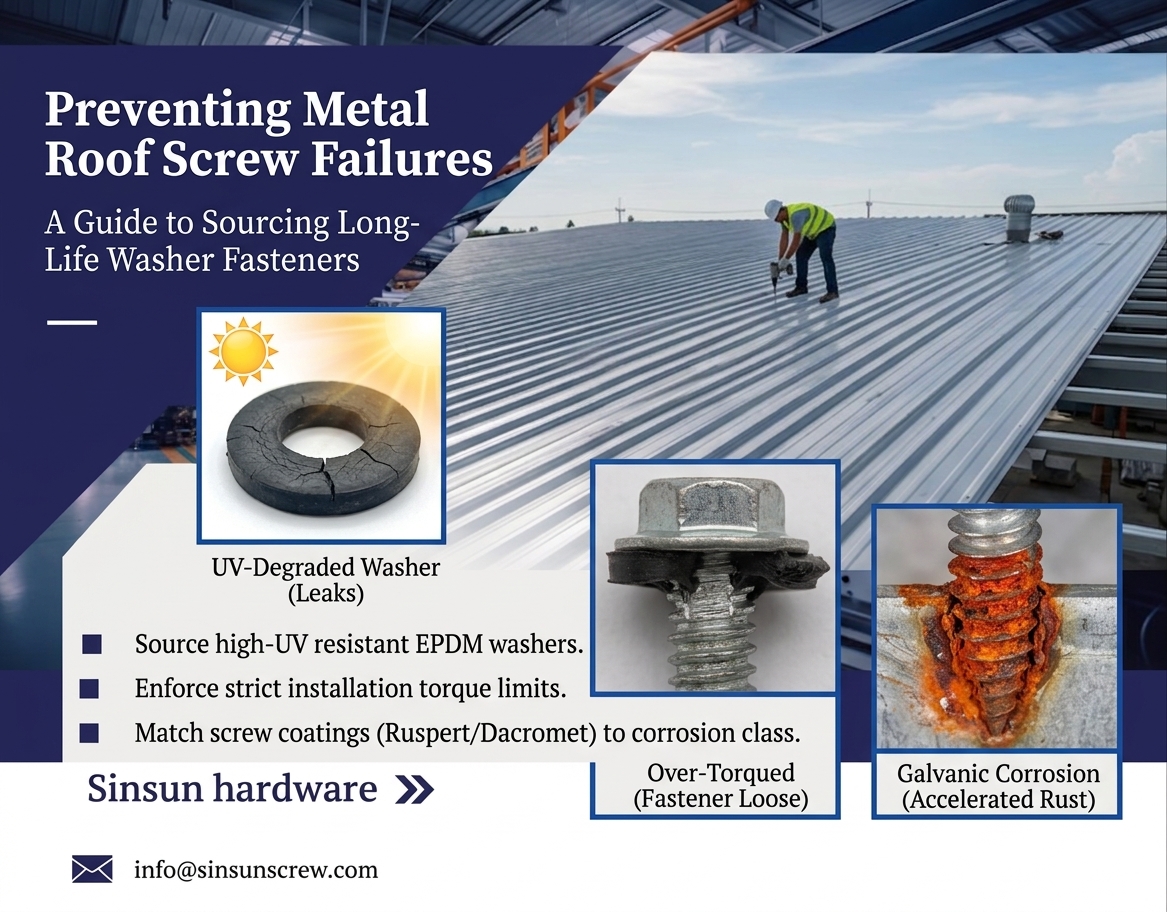
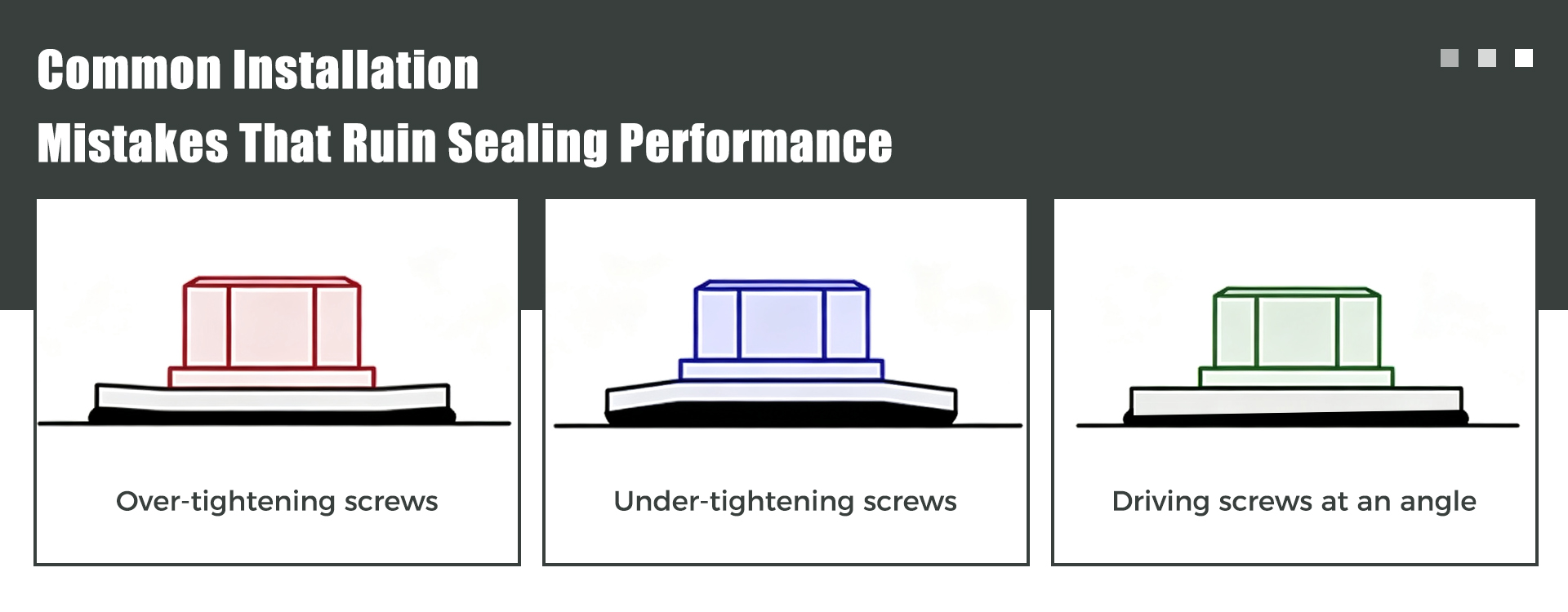
Even the best EPDM washer cannot be expected to perform well with good driving practices. These three mistakes make up a huge percentage of roof fastener leaks:
Over-tightening screws
Too much torque crushes the rubber gasket beyond its elastic limit. When panels move due to thermal movement the rubber cannot spring back to ensure a tight seal.
Under-tightening screws
Insufficient compression leaves a small hidden void between the metal sheet and washer. Over time eventually wind driven rain will get thru the gap.
Driving screws at an angle
The washer is tilted so one sided compression. Water creeps under the gasket and down the uncompressed edge.
Experienced crews employ clutch-controlled drills to maintain constant torque and ensure screws are perpendicular to roof panels for uniform washer contact.
Final Summary
The washer is much more than a little addition to your roofing screws. It is the main waterproof barrier at each penetration point on a metal roof.
- Bonded EPDM composite washer are the safest investment for all permanent exposed roofing applications.
- Bonded neoprene washer are a low-cost option for protected, medium-term builds.
- PVC plastic washer are only used for temporary structures and have strict lifespan limits.
Getting the right sealing washer for your roofing screws right from the start will help you to lower your warranty claims, reduce your ongoing maintenance costs and prevent unnecessary roof leaks before they happen.
When placing orders for bulk roofing fasteners for future metal roof contracts, it is essential to check the material of the fitted washer with your hardware supplier. The elementary verification process serves to avert the exorbitant costs and untimely failures that often accompany discrepancies in on-site materials and premature deterioration of roof sealing components.
Need roofing screws with the right sealing washers for your next project? Contact Sinsun Hardware. Let us know what type of roof you have and what climate you live in. When you place a bulk order, we will send you samples and suggest the appropriate screw and washer combination.