
Hex Bolt vs Flange Bolt vs Carriage Bolt: How to Choose the Right Fastener for Your Application
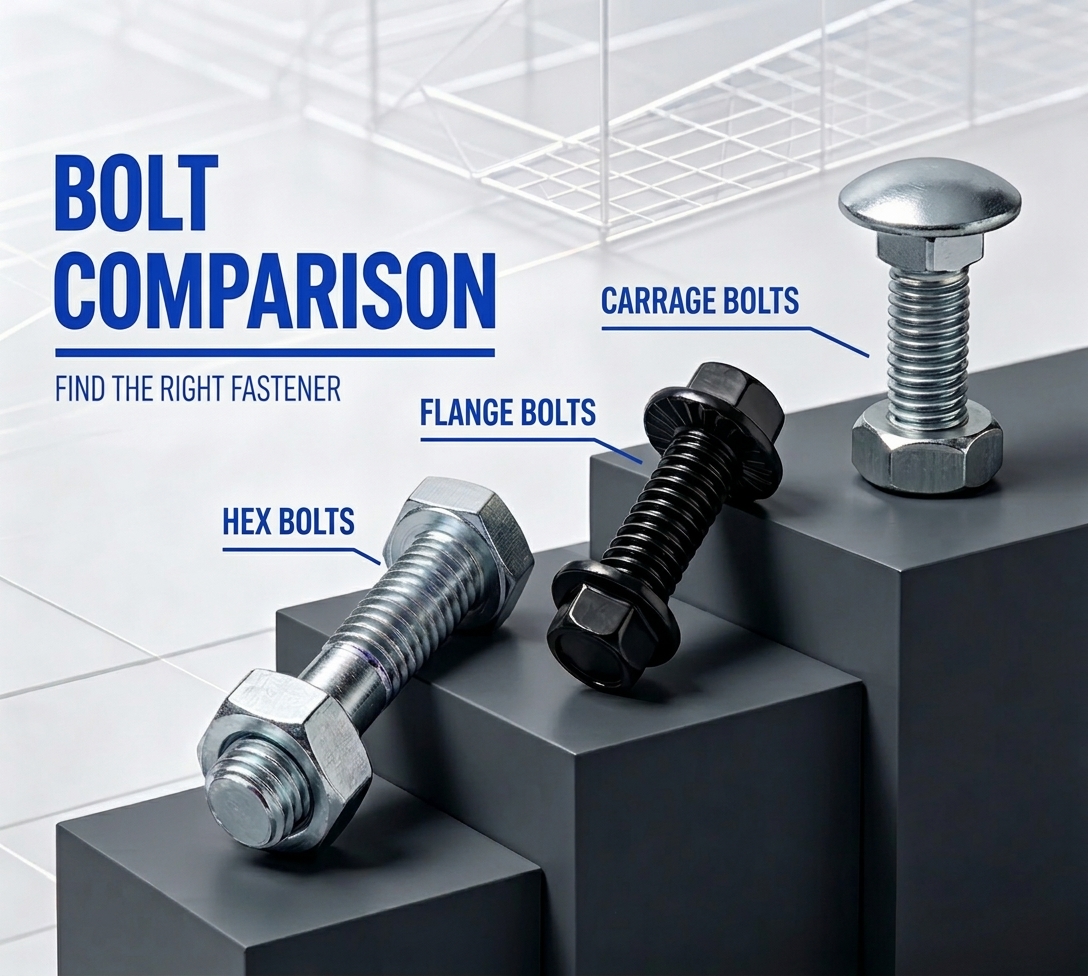
If you've ever stood in front of a parts bin wondering which bolt to grab, you're not alone. Hex bolts, flange bolts, and carriage bolts all do the same basic job — holding things together — but they're designed for very different situations. Pick the wrong one and you'll deal with loosening, surface damage, or a callback from the inspector.
This guide breaks down the key differences between these three bolt types and helps you match the right fastener to the right application. Whether you're sourcing for a construction project, an automotive assembly line, or a woodworking shop, the information below should give you a practical framework for making that call.
What Is a Hex Bolt?
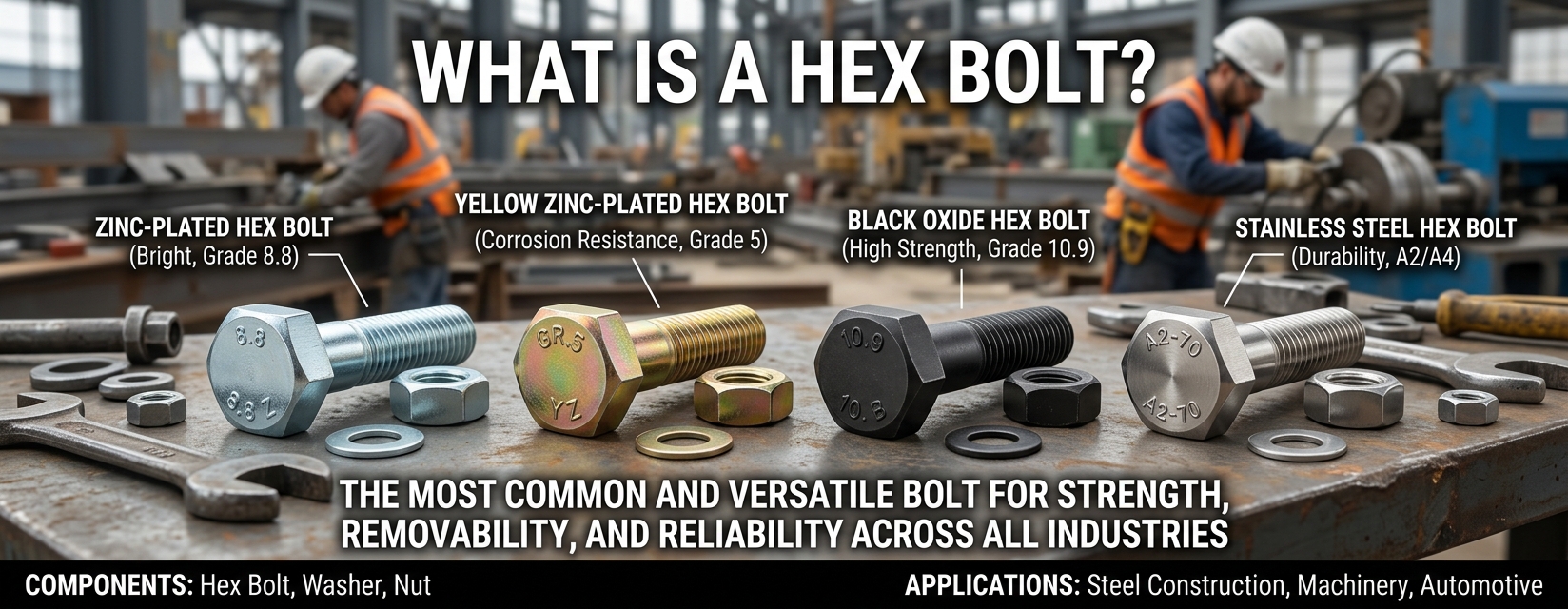
A hex bolt, also called a hex cap screw or hex head bolt, has a six-sided head that you tighten with a wrench or socket. It's the most widely used bolt type across construction, machinery, and automotive applications — essentially the default choice when you need a strong, removable joint.
Hex bolts are typically paired with a nut and a separate washer. The washer sits under the head and helps spread the clamping load across the surface. That separate washer matters because it gives you flexibility: you can swap in a different washer material, add a lock washer, or omit it entirely depending on the joint design. But it also means one more component to stock, handle, and keep track of.
1.Hex bolts come in a range of grades and materials. Common options include:
♠ Carbon steel: Grades 4.8, 8.8, 10.9, 12.9 (metric) or Grade 2, 5, 8 (SAE)
♠ Stainless steel: A2 (304) and A4 (316) for corrosion resistance
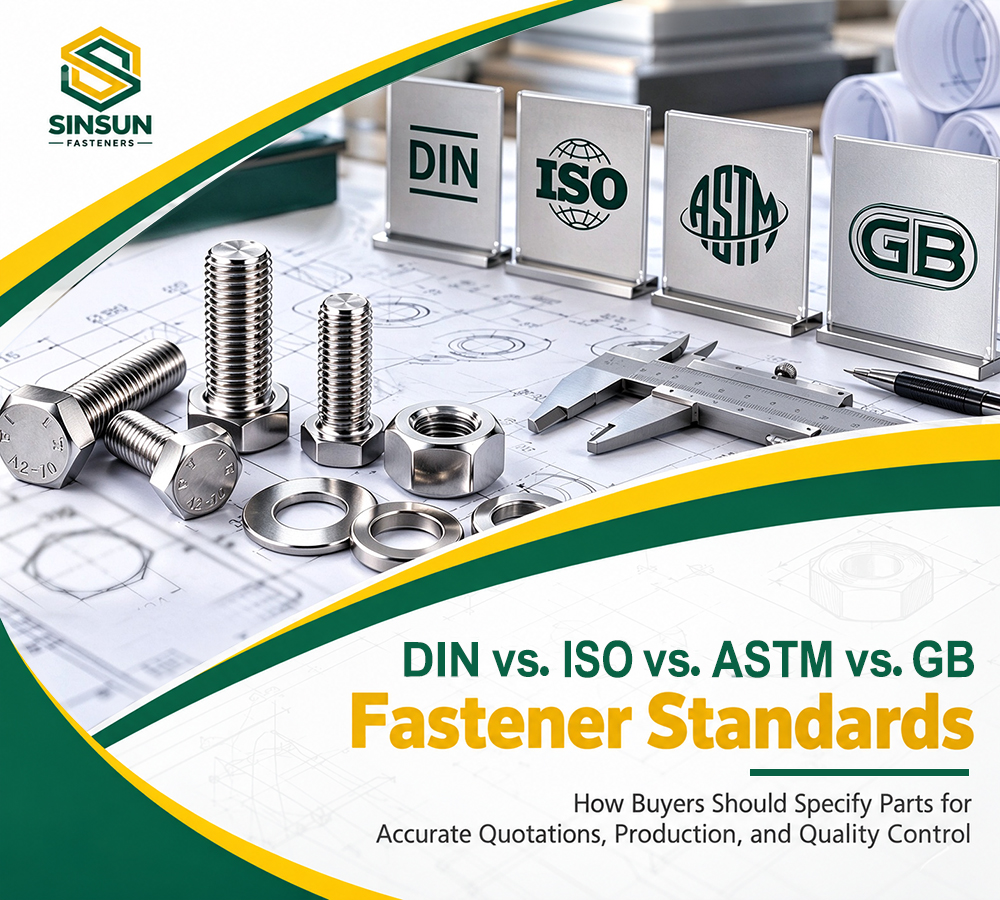
♠ Standards: DIN 931/933, ISO 4014/4017, ANSI/ASME B18.2.1
2. Where hex bolts work best:
●Steel-to-steel structural connections●Machinery frames and equipment mounts
●Automotive components where future adjustment is expected
●Any assembly where both sides of the joint are accessible
The main drawback is the need for that separate washer. In high-vibration environments or on soft materials, skipping the washer can lead to surface damage or loosening. And if you're working in a tight space where you can't fit a washer, a hex bolt alone won't distribute the load well.
What Is a Flange Bolt?
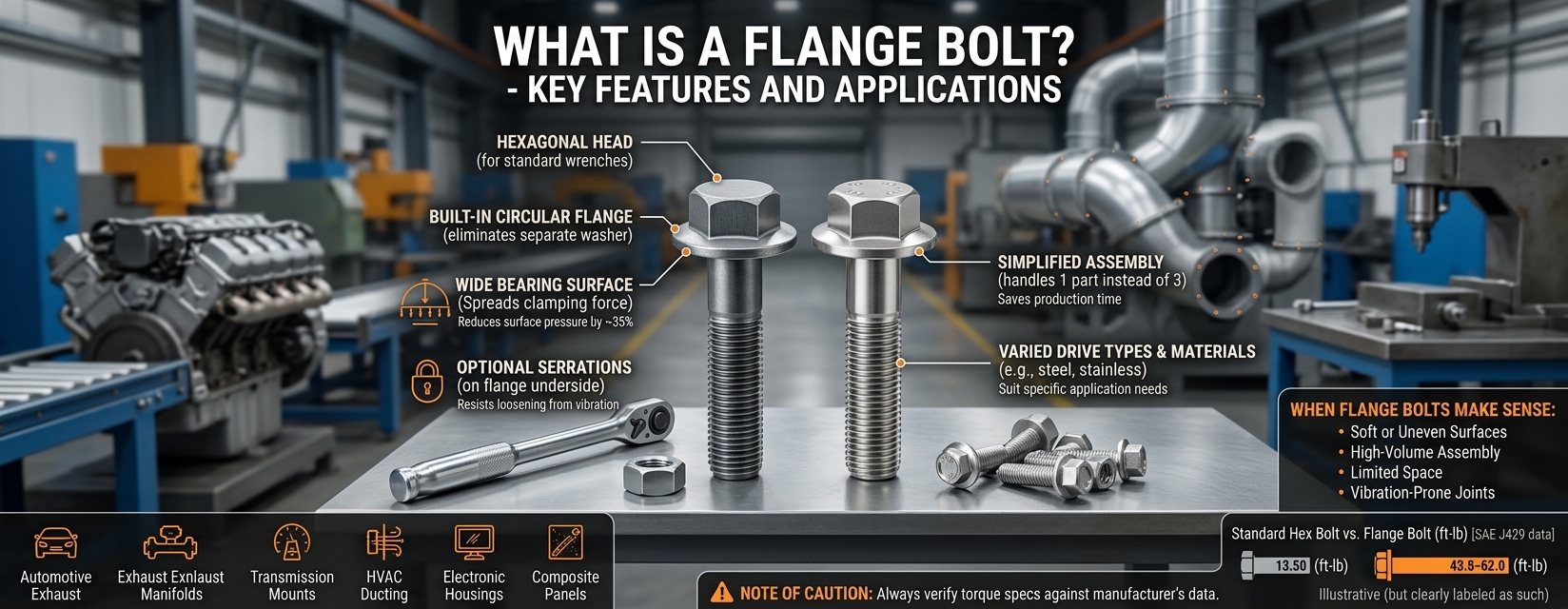
This design has a few practical implications. First, assembly gets simpler — you're handling one part instead of three. On a production line, that time savings adds up quickly. Second, the flange reduces surface pressure by roughly 35% compared to a standard bolt, according to SAE J429 testing data. That makes flange bolts a good fit for softer materials like aluminum housings, composite panels, or painted surfaces that would otherwise get crushed or marred.
This design has a few practical implications. First, assembly gets simpler — you're handling one part instead of three. On a production line, that time savings adds up quickly. Second, the flange reduces surface pressure by roughly 35% compared to a standard bolt, according to SAE J429 testing data. That makes flange bolts a good fit for softer materials like aluminum housings, composite panels, or painted surfaces that would otherwise get crushed or marred.
There's also a torque consideration. Because the flange has a larger bearing surface and different friction characteristics, flange bolts typically require 10–15% less torque than an equivalent standard hex bolt. Here's a quick comparison:
| Bolt Size | Standard Hex Bolt (ft-lb) | Flange Bolt (ft-lb) | SS304 / SS316 Stainless Steel |
|---|---|---|---|
| 1/2"-13 | 105 | 90 | 2,000+ Hours |
| 9/16"-12 | 145 | 125 | Severe Marine / Acidic Regions (C5) |
| 5/8"-11 | 195 | 170 | High-Temp / Heavy-Duty EPDM |
Source: SAE J429 testing data
Flange bolts are common in automotive exhaust manifolds, transmission mounts, HVAC ducting, and anywhere you need load distribution without adding a washer to the bill of materials. They're also useful in slotted or oversized holes, where the larger bearing surface helps prevent the bolt from rotating during tightening.
When flange bolts make sense:
● Soft or uneven mating surfaces
●High-volume assembly where reducing component count matters
●Applications with limited space under the head
●Vibration-prone joints that benefit from the broader contact area.
A note of caution: don't substitute a flange bolt for a standard hex bolt without checking the torque spec. The reduced friction under the head can produce up to 20% higher preload than intended if you use the same torque value. Always verify against the manufacturer's data.
What Is a Carriage Bolt?
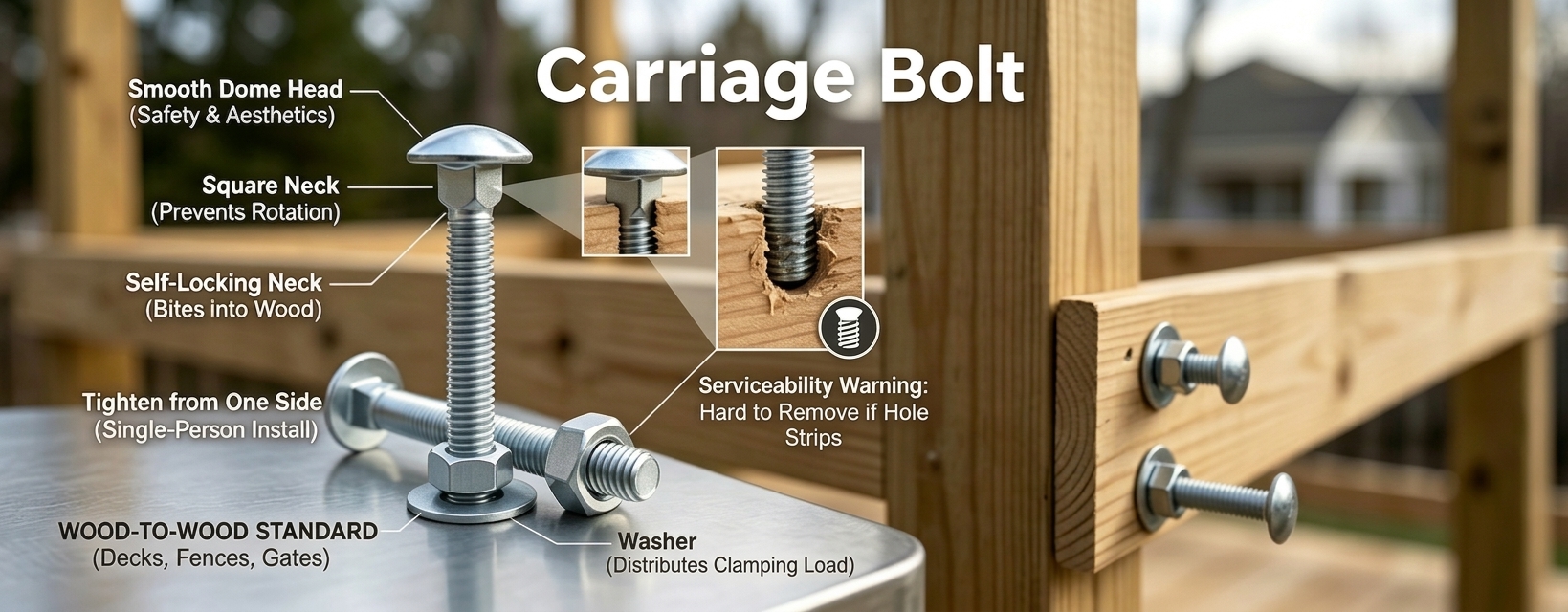
A carriage bolt (also called a coach bolt) looks different from the other two at a glance. It has a smooth, rounded dome head with no drive slot or wrenching surface. Beneath the head sits a short square section that's slightly wider than the shank. When you push the bolt through a pre-drilled hole and tighten the nut on the other side, that square neck bites into the material and locks the bolt in place.
This design solves a specific problem: it lets you tighten a bolt from one side only. You don't need to hold the head with a wrench because the square neck prevents rotation. That's why carriage bolts are the standard choice for wood-to-wood connections — decks, fences, gates, playground equipment, and outdoor furniture.
The smooth dome head also serves an aesthetic and safety purpose. There's nothing to snag clothing or skin on the finished face, which matters for handrails, seating, and anything a person might brush against. The head sits nearly flush or slightly proud of the surface, depending on how you drill the hole.
Carriage bolts are usually available in:
Explore Sinsun Hardware Roofing Screw Series or contact our engineering team at info@sinsunscrew.com for technical data sheets, OEM custom packaging, and free bulk samples.
Diameter range: #10 to 1" (M6 to M24)
Common materials: Zinc-plated steel, hot-dip galvanized, stainless steel
Standards: ASME B18.5, DIN 603
Where carriage bolts work best:
●Wood-to-wood connections (decks, fences, timber frames)
●Wood-to-metal joints where the head side needs a clean finish
●Playground equipment and outdoor structures
●Any application where the head is inaccessible or you only want to tighten from one side
The catch is removal. If the square neck has stripped the wood or the hole has worn, the bolt may spin freely when you try to back the nut off. That makes carriage bolts less serviceable than hex or flange bolts in applications where you might need to disassemble the joint later.
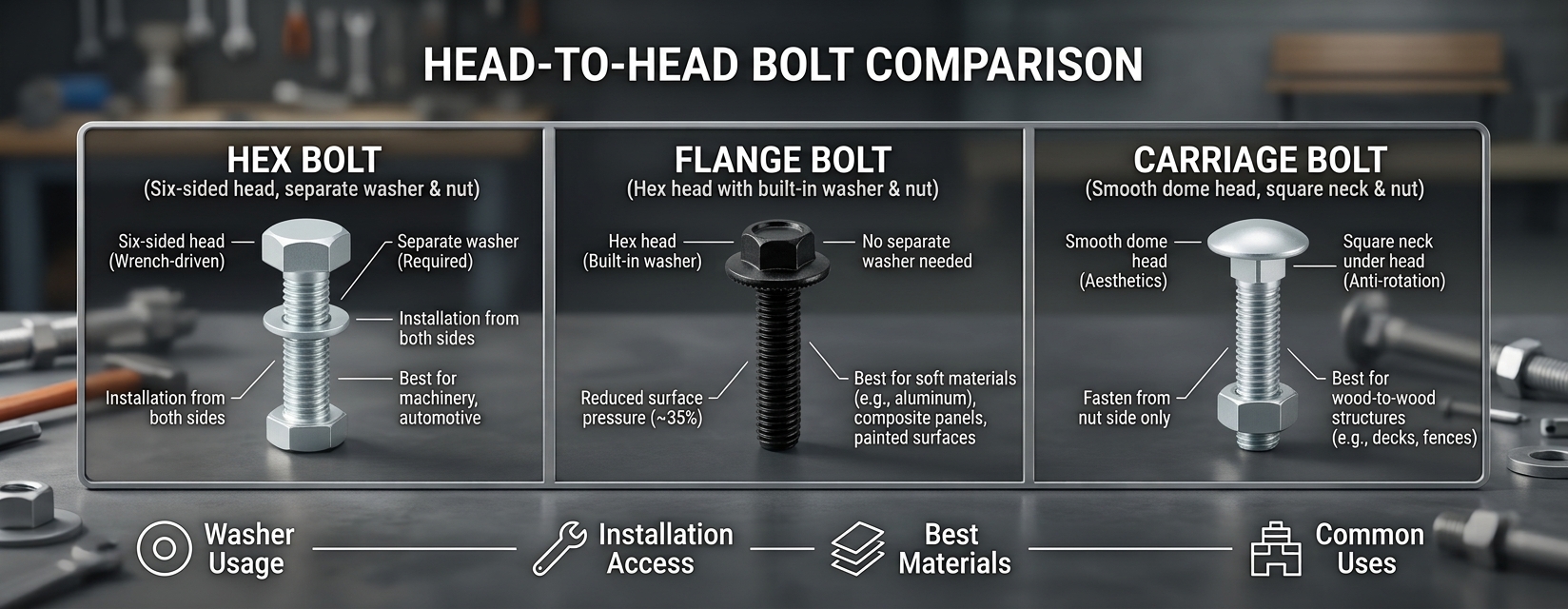
Head-to-Head Comparison
Here's a side-by-side look at the three bolt types:.
| Feature | Hex Bolt | Flange Bolt | Carriage Bolt |
|---|---|---|---|
| Head style | Six-sided, wrench-driven | Six-sided with integrated flange | Smooth dome, no drive |
| Anti-rotation | None (hold with wrench) | None (larger bearing surface helps) | Square neck under head |
| Washer needed | Yes, separate washer | No, flange acts as washer | Usually not needed |
| Installation access | Both sides | Both sides | One side (nut side only) |
| Typical materials | Steel, stainless, alloy | Steel, stainless | Zinc-plated steel, galvanized, stainless |
| Common standards | DIN 931/933, ISO 4014/4017, ASME B18.2.1 | DIN 6921, ISO 4161, JIS B1189, ASME B18.2.3.9M | ASME B18.5, DIN 603 |
| Best for | General structural, machinery, automotive | Soft surfaces, high-volume assembly, vibration | Wood structures, outdoor, clean-face joints |
| Removability | Easy | Easy | Moderate to difficult |
| Torque characteristics | Standard | 10–15% lower than hex | Lower (wood bearing governs) |
A Simple Decision Framework
If you're not sure which bolt to specify, run through these questions:
1. What materials are you joining?
Metal to metal: hex bolt or flange bolt
Wood to wood: carriage bolt
Wood to metal: carriage bolt (if head-side access is limited) or hex bolt (if both sides are accessible)
2. Can you access both sides of the joint?
Yes: hex or flange bolt
No: carriage bolt
3. Is the mating surface soft or prone to damage?
Yes: flange bolt (the integrated flange spreads the load)
No: hex bolt works fine
4. Will the joint need to be disassembled later?
Yes: hex or flange bolt
No: carriage bolt is acceptable
5. Is vibration a concern?
Yes: flange bolt (larger bearing surface) or hex bolt with a lock washer
No: any of the three
What B2B Buyers Should Consider
For procurement teams, the choice between these bolt types isn't just about engineering — it's about total cost of ownership. A few things to weigh:
◆Component count: Flange bolts reduce the number of parts you need to stock and handle. On a high-volume line, that can translate into real savings.
◆Standardization: If your assemblies use a mix of bolt types, consider whether standardizing on one or two types simplifies inventory without compromising performance.
◆Supplier capability: Not every manufacturer offers the full range of standards. If you need DIN 6921 flange bolts alongside ASME B18.5 carriage bolts, confirm the supplier can handle both.
The Short Version
Hex bolts are the general-purpose choice for structural steel connections, machinery, and any application where you need controlled tightening and future adjustability. They require a separate washer but offer the widest range of grades and materials.
Flange bolts are a hex bolt with a built-in washer. They simplify assembly, protect soft surfaces, and handle vibration better than a plain hex bolt. Use them when component count matters or when the mating surface can't take a concentrated load.
Carriage bolts are designed for wood. The smooth dome head and square neck let you tighten from one side while keeping the finished face clean and snag-free. They're the standard for decks, fences, and outdoor structures — but they're not a substitute for structural bolts in engineered connections.
If you're sourcing any of these bolt types and want to talk through specifications, standards, or volume pricing, feel free to reach out. We can help you match the right fastener to your application and provide the documentation your project requires. Standards referenced in this article include DIN 931, DIN 933, DIN 603, DIN 6921, ISO 4014, ISO 4017, ISO 4161, ASME B18.2.1, ASME B18.5, ASME B18.2.3.9M, JIS B1189, and SAE J429.
This is a paragraph